How To Compare Private Label Hoop Earrings Manufacturers?
-
Compare a private label hoop earrings manufacturer by materials, quality control, plating, compliance, MOQ, customization, and lead times.
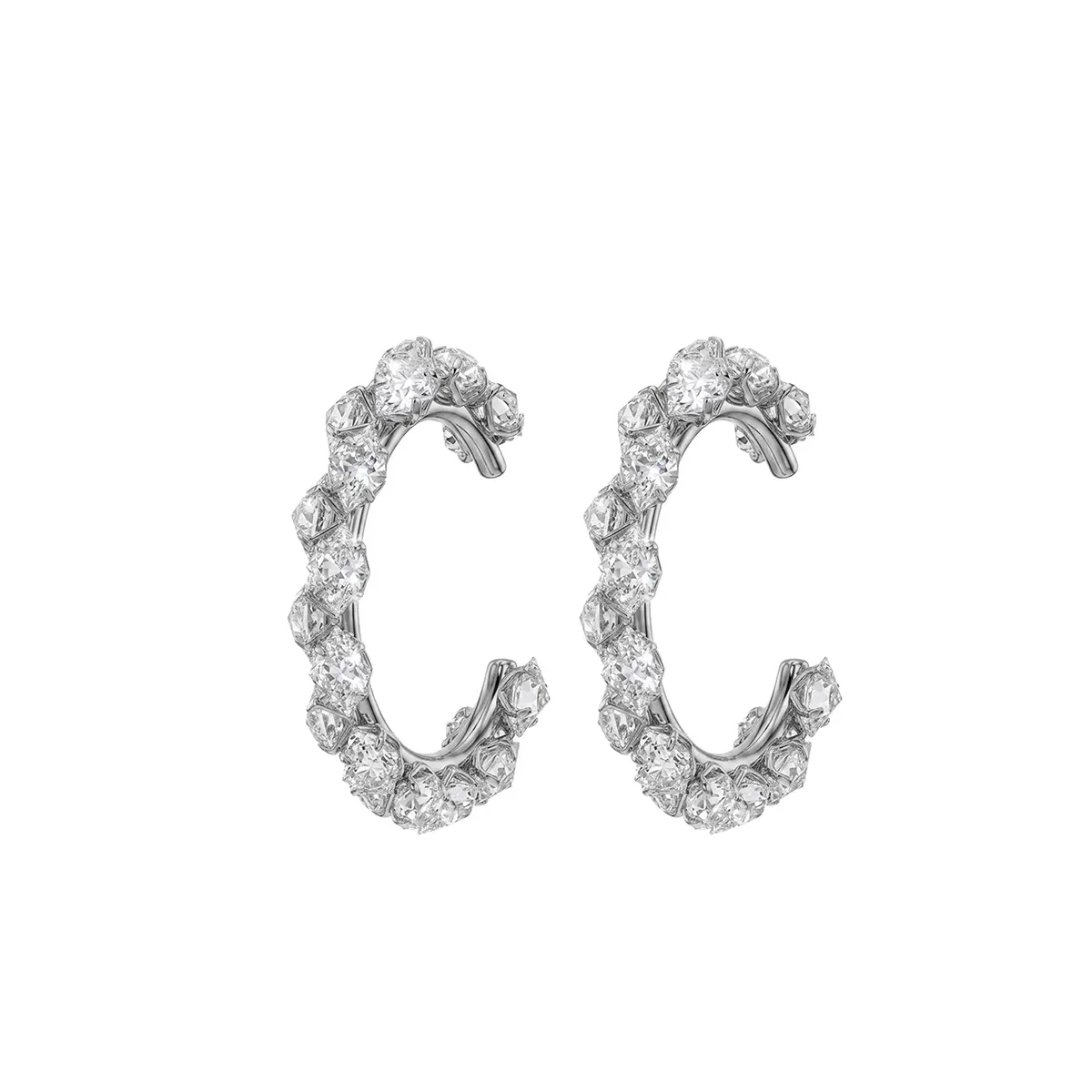
Choosing a private label hoop earrings manufacturer requires more than comparing catalog prices. A suitable partner should control materials, forming, welding, polishing, plating, assembly, and final inspection. Private label production also requires consistent specifications across repeated orders. Buyers should therefore request technical details before discussing large quantities. These details include metal composition, hoop diameter, wire thickness, clasp construction, surface finish, and logo application. Sampling also matters because photographs cannot reveal every production issue. A physical sample can expose uneven curves, weak joints, rough edges, or loose closures. Manufacturing control becomes even more important when a brand plans several related designs. For example, a manufacturer may need identical plating color across multiple hoop sizes. Reliable suppliers should explain how their production process maintains those specifications.
How Should You Check Manufacturing Experience?
Manufacturing experience becomes meaningful when a supplier can demonstrate relevant production capabilities. Buyers should ask how long the factory has produced earrings rather than relying only on company age. Hoop earrings require accurate forming because small deviations become obvious around circular profiles. Production teams also need suitable welding, polishing, and plating equipment. In-house processes can reduce communication gaps between development and production. Some established manufacturers have served internationally recognized brands, including Swarovski, Disney, and Vivienne Westwood. Such experience can provide useful evidence of established production systems and quality requirements. However, buyers should still request project-specific evidence before placing orders. A strong supplier should show factory capabilities, sample records, inspection procedures, and repeat-order controls. Production history becomes more valuable when the supplier can connect its experience with comparable hoop designs, materials, quantities, and finishing requirements.
Which Materials Matter For Custom Hoop Earrings?
Material selection directly affects weight, durability, corrosion resistance, price, and skin-contact performance. Stainless steel suits brands seeking durability and relatively stable surface performance. Brass offers flexible forming and attractive plating options for fashion-focused collections. Sterling silver provides a higher material positioning but increases material cost and production considerations. Buyers should request the exact alloy specification rather than accepting broad terms such as “premium metal.” They should also confirm the material used for posts, clasps, hinges, and decorative components. These smaller components can influence comfort and compliance even when the hoop body uses another alloy. For EU sales, nickel restrictions apply to earrings and other products with prolonged skin contact. REACH Annex XVII limits nickel release for relevant articles. Material documentation therefore deserves the same attention as appearance and price.
How Can You Compare Hoop Earring Manufacturing Quality?
Quality comparison for a private label hoop earrings manufacturer should focus on measurable production points rather than visual impressions alone. A circular hoop needs consistent curvature from one end to the other. Uneven forming can create visible asymmetry when customers wear both earrings together. Welding points also require inspection because excessive heat can distort thin sections. Polishing should remove burrs without reducing critical dimensions around joints or closures. Hinged hoops require additional checks for alignment, opening resistance, and repeated movement. Buyers should also compare weight tolerance between samples and bulk units. A useful inspection specification can define acceptable limits for diameter, wire thickness, weight, plating appearance, and closure function. Structured inspection systems can include material checks, plating checks, detail inspections, laboratory testing, and final inspection. These controls provide more useful evidence than a simple “quality guaranteed” statement.
What Customization Services Should You Expect?
Private label projects usually require customization beyond adding a logo. Buyers may request different hoop diameters, wire profiles, surface textures, stones, enamel colors, closures, and plating finishes. OEM production normally follows buyer specifications, drawings, samples, or technical files. ODM services can provide existing designs that buyers modify for their collections. The difference affects development time, tooling requirements, and intellectual property ownership. A capable supplier should clarify mold charges before sampling begins. Logo placement also requires dimensional checks because engraving can weaken thin areas. Packaging customization may include jewelry cards, pouches, boxes, barcodes, and compliance labels. Established OEM programs commonly support custom molds, plating colors, branding, packaging, and collection development. Buyers should request a written customization scope before approving production. Clear specifications can prevent disputes when the project moves from sampling to bulk production.
How Do Plating And Finishing Affect Product Performance?
Plating should be evaluated as a manufacturing system rather than a simple color choice. The final appearance depends on surface preparation, polishing quality, base metal, intermediate layers, plating material, and coating thickness. Gold-colored finishes can vary significantly between batches if process controls are weak. PVD and electroplating also create different performance characteristics and cost structures. Buyers should request plating specifications and test records when durability matters. A useful specification can identify the desired color, coating structure, thickness target, and acceptable visual variation. Salt-spray testing may help evaluate corrosion resistance for suitable product constructions. Manufacturers with established quality systems may perform plating thickness checks and coating analysis. These records cannot replace independent testing when required, but they provide evidence of process control. Surface appearance should therefore be judged alongside measurable finishing requirements.
Which Compliance Documents Should Buyers Request?
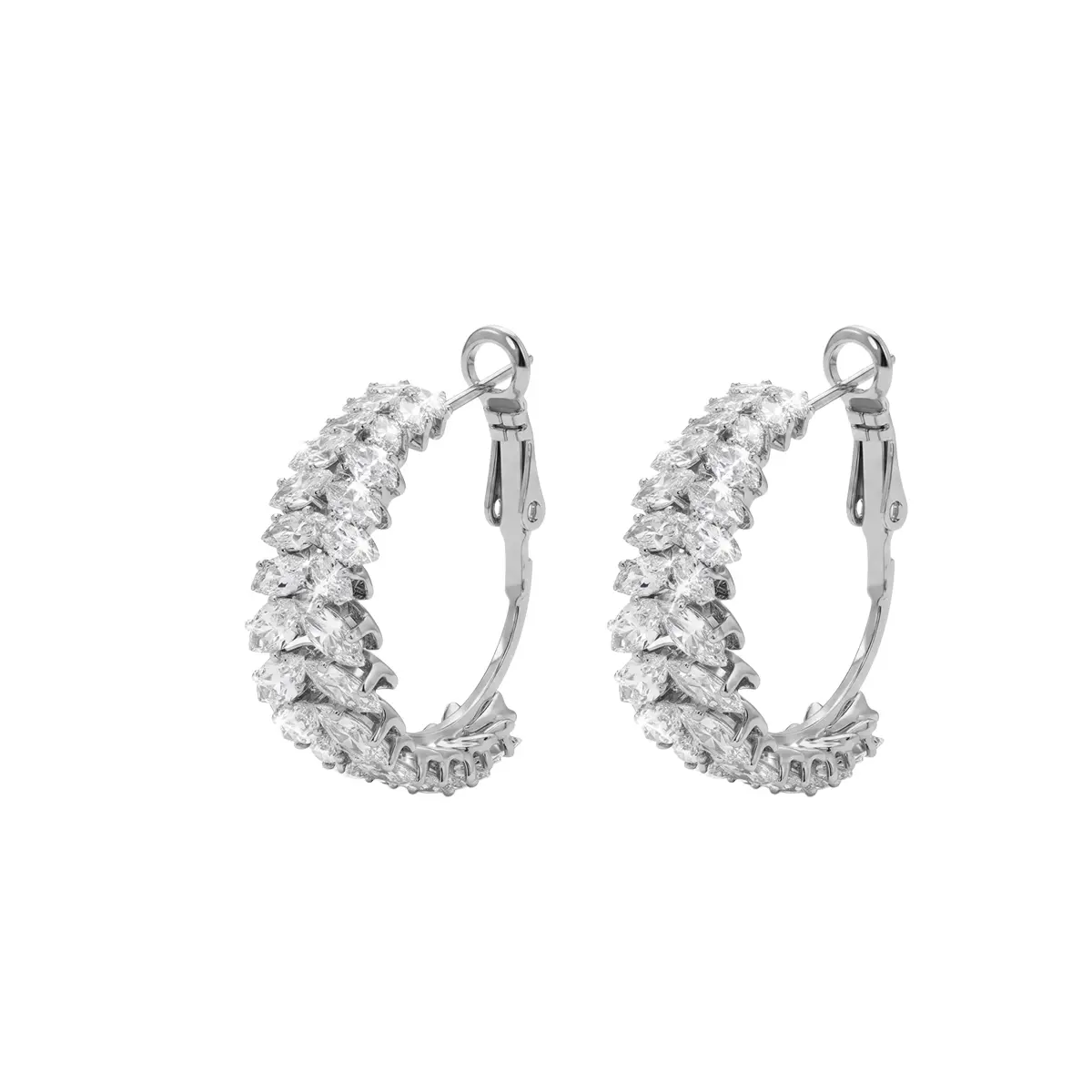
Compliance documentation for a private label hoop earrings manufacturer should match the destination market and the actual product specification. Buyers should request material declarations, laboratory reports, and relevant chemical testing records. REACH documentation is particularly important for products entering the European market. Nickel release deserves separate attention because earrings directly contact the skin. EU REACH Entry 27 sets a 0.5 μg/cm²/week nickel release limit for relevant prolonged skin-contact articles. Piercing posts have a lower 0.2 μg/cm²/week migration limit. Buyers should verify the tested product, material, finish, laboratory, test date, and report number. A supplier’s general certificate does not automatically prove compliance for every SKU. Manufacturers may also use third-party testing for nickel, lead, cadmium, and other requirements. Product-specific evidence remains more useful than broad marketing claims.
What Should A Manufacturer Comparison Table Reveal?
A useful comparison table should connect supplier capabilities with measurable purchasing requirements. Buyers can use the following framework when screening potential partners.
| Comparison Factor | What To Check | Why It Matters |
|---|---|---|
| Material | Alloy, composition, component materials | Affects durability, weight, cost, and compliance |
| OEM/ODM | Custom molds, modifications, development support | Determines design flexibility |
| Plating | Process, color control, thickness testing | Influences appearance and wear resistance |
| MOQ | Minimum quantity per design | Affects inventory risk |
| QC | Inspection stages and acceptance criteria | Controls batch consistency |
| Testing | REACH, nickel, lead, cadmium reports | Supports market compliance |
| Packaging | Cards, boxes, pouches, labels | Supports brand presentation |
This comparison becomes more useful when every supplier receives the same technical questions. Buyers should avoid comparing one supplier’s finished-product price against another supplier’s incomplete quotation. A lower quotation may exclude testing, custom molds, packaging, or special plating. Conversely, a higher quotation may include several services that reduce later outsourcing. Public OEM programs show that manufacturing support can extend from design and material selection through plating, testing, packaging, and bulk production. Buyers should therefore separate mandatory requirements from optional services. That approach makes quotations easier to compare and reduces hidden costs. It also creates a clearer purchasing record for future reorders and supplier audits.
How Should You Compare MOQ, Sampling, And Lead Times?
MOQ should be evaluated alongside sampling costs, tooling, production capacity, and expected sales volume. A very low MOQ may help new brands test a collection with less inventory exposure. However, smaller production runs can sometimes increase unit costs or limit customization choices. Sampling should follow a defined approval process before bulk manufacturing begins. Buyers should confirm whether sample fees include mold development, revisions, shipping, and final sample retention. Lead times should also separate development time from production time. Existing-style samples can require only several working days, while custom OEM samples may require several weeks. Actual timing depends on design complexity, tooling, material availability, and factory workload. A written production schedule should therefore identify approval deadlines, raw-material preparation, manufacturing, inspection, packaging, and shipment.
How Important Are Packaging And Private Label Branding Options?
Packaging affects both brand consistency and product protection during transportation. A supplier may offer jewelry cards, pouches, boxes, barcode labels, hang tags, and branded inserts. Buyers should check whether packaging dimensions match the hoop diameter and thickness. Oversized packaging can increase shipping volume, while insufficient protection may cause scratches or deformation. Branding details also require proofing before mass production. Logo scale, engraving depth, printing position, color references, and barcode accuracy should receive separate approval. Established private-label programs can provide custom cards, pouches, boxes, polybags, barcode labels, and compliance labeling. These options provide useful benchmarks for supplier discussions. Packaging should therefore appear in the technical quotation rather than remain an informal afterthought. Clear packaging specifications can also simplify repeat orders and reduce artwork errors.
What Should Buyers Check During Sample Approval?
Sample approval should test both appearance and function before production begins. Buyers can use the following checkpoints during evaluation:
- Confirm hoop diameter and wire thickness against approved specifications.
- Measure finished weight for both earrings and compare pair consistency.
- Check curvature, symmetry, weld points, and edge smoothness.
- Test hinges, posts, clasps, and opening mechanisms repeatedly.
- Inspect plating color, surface uniformity, scratches, and exposed base metal.
- Verify logo position, engraving depth, and packaging artwork.
- Match laboratory documents with the exact production specification.
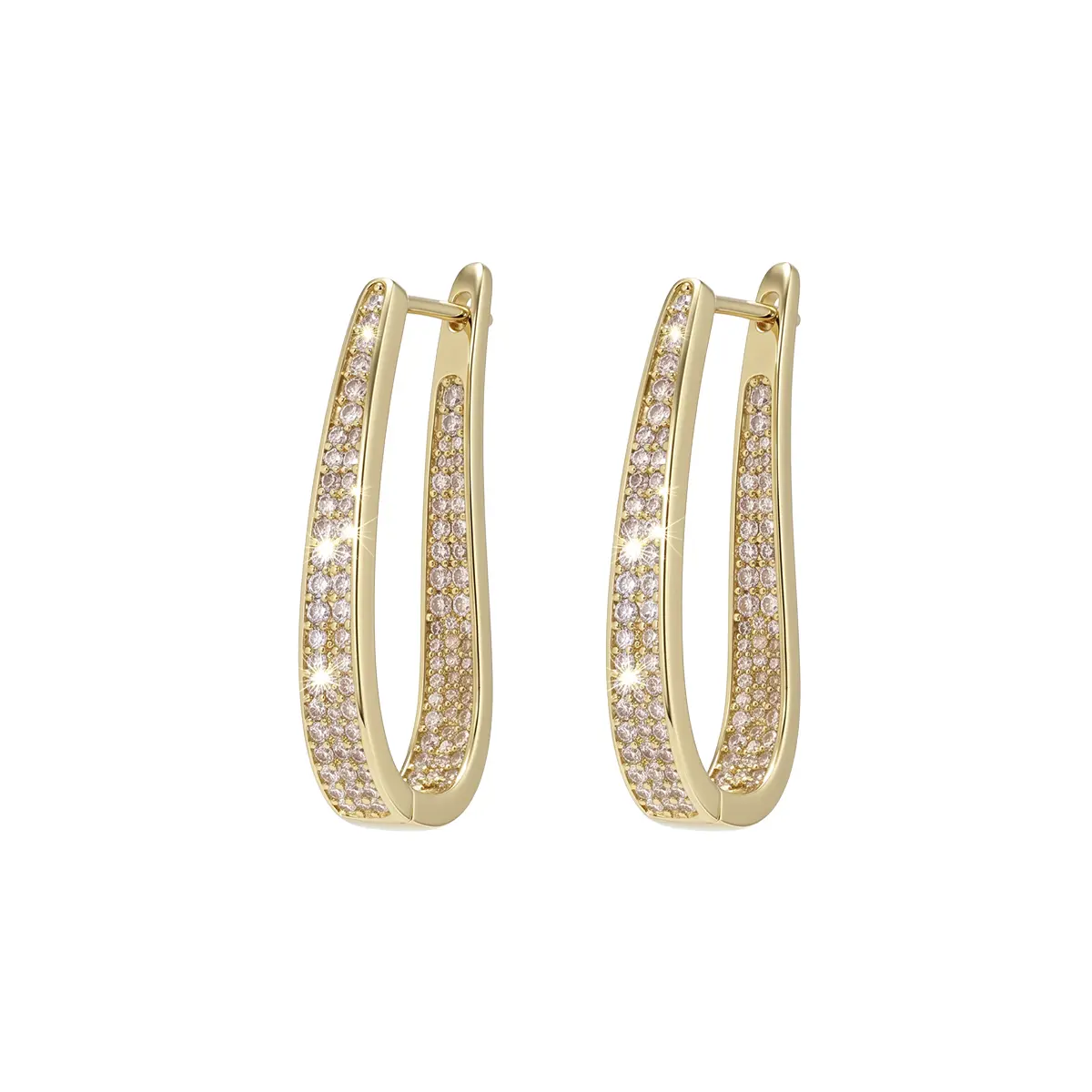
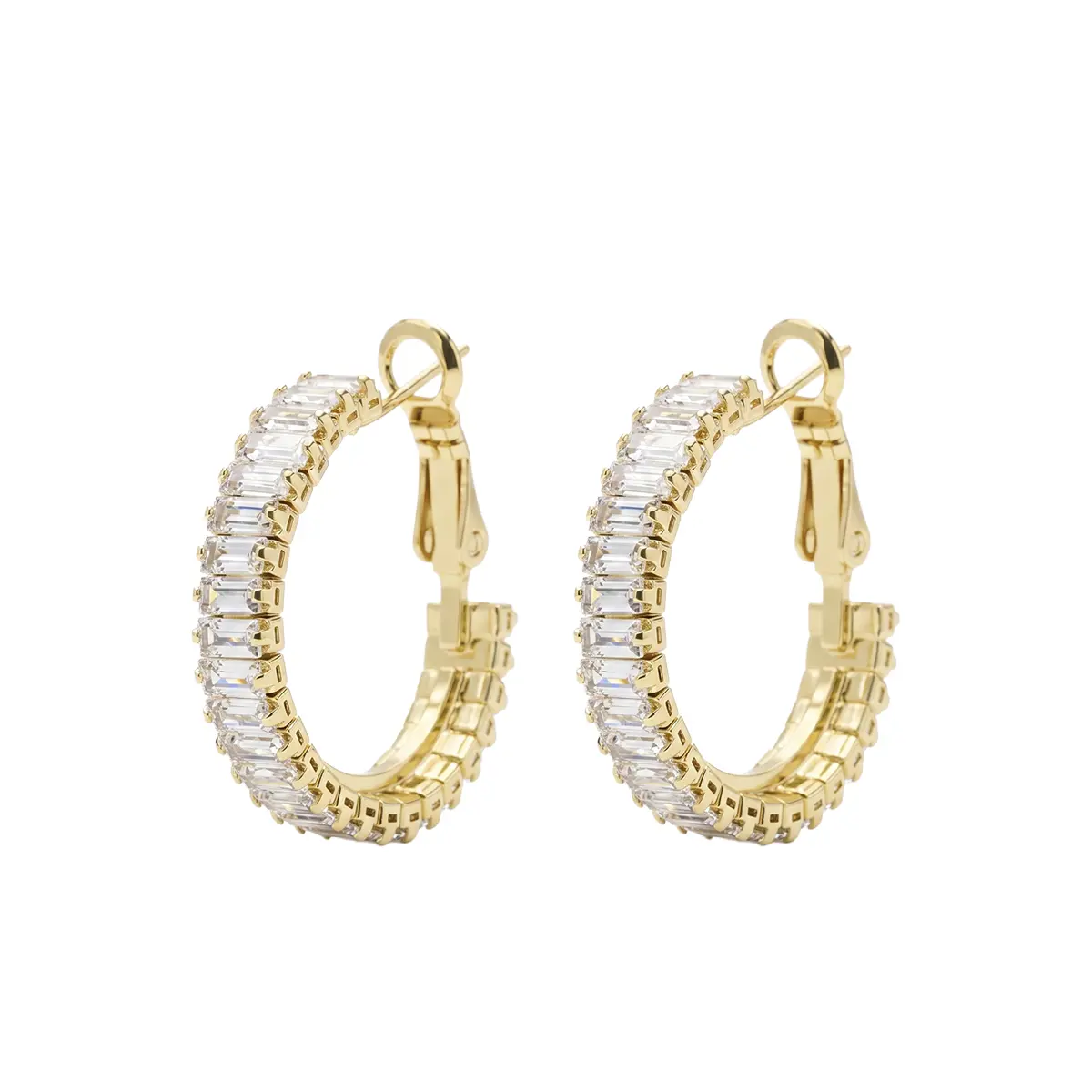
These checks become especially valuable when a collection contains multiple sizes or finishes. For example, a buyer may approve a 30 mm hoop before adding 50 mm and 70 mm versions. Each size can require separate forming controls because larger diameters may respond differently during bending and welding. Decorative designs also introduce additional inspection points. A real product example such as Zircon Hollow Out Copper Hoop Earrings with Hip Hop Design would require checks for cutout consistency, stone placement, copper surface preparation, and final plating. Those details show why sample approval should cover construction rather than appearance alone. A signed specification sheet can then become the reference for production and future reorders.
How Can You Evaluate Communication And Quality Control?
Communication quality can reveal manufacturing discipline before a large order begins. Suppliers should provide clear answers about materials, dimensions, production steps, inspection points, and testing. Technical questions should receive specific responses rather than generic promises. Buyers should also ask who approves material substitutions during production. Unauthorized substitutions can change weight, color, corrosion resistance, or skin-contact performance. Quality control should cover incoming materials, work-in-process production, finishing, assembly, and final packing. Some manufacturers describe multi-stage inspection systems covering material checks, polishing, plating, assembly, and final inspection. Another useful example involves in-house XRF analysis for metal composition and plating thickness verification. Such equipment does not guarantee every batch, but it demonstrates a measurable approach to quality verification. Buyers should request comparable evidence before approving long-term production.
Why Should You Verify A private label hoop earrings manufacturer Before Ordering?
Supplier verification for a private label hoop earrings manufacturer reduces uncertainty across design, materials, compliance, production, and delivery. Buyers should first confirm whether the factory actually handles the required manufacturing processes. Next, they should verify material specifications and relevant laboratory documents. Sample approval should establish measurable dimensions, finishing standards, packaging details, and acceptable defects. Production quotations should then separate unit price from molds, samples, testing, packaging, and freight. A second real-world example is useful here. Some established factories combine OEM/ODM development with plating, testing, packaging, and bulk production. Other manufacturers perform material checks, plating inspections, laboratory testing, and final inspection. These examples show why supplier comparison should examine actual processes. A strong purchasing file should preserve approved samples, specifications, reports, artwork, and inspection criteria.
How Can Buyers Compare Final Product Value?
Final value depends on the complete supply package rather than unit price alone. A supplier offering reliable materials, stable plating, accurate forming, testing support, and consistent packaging may reduce downstream quality costs. Buyers should also consider how easily the factory can reproduce approved designs. Repeat-order consistency matters because customers expect the same product to retain its original dimensions and finish. Inventory planning creates another consideration. A supplier with flexible MOQ options may support gradual collection expansion, while larger factories may offer broader production capacity. The appropriate choice depends on the brand’s sales model, target market, product positioning, and order volume. For example, Big Flat Gold Hoop Earrings with Classic Wide Design may require different forming and polishing controls than a lightweight narrow hoop. Product geometry should therefore influence the technical evaluation. Comparing complete manufacturing capability provides a more useful purchasing basis than comparing catalog prices alone.
FAQ
What Is A Private Label Hoop Earrings Manufacturer?
A private label manufacturer produces jewelry that a brand sells under its own identity. The buyer can normally specify materials, dimensions, finishes, branding, packaging, and quality requirements. OEM projects usually follow buyer-provided designs or technical specifications. ODM projects can involve supplier-developed designs that the buyer adapts for its collection. The exact service scope differs between factories, so buyers should confirm it before sampling. Production may include forming, casting, polishing, plating, assembly, inspection, packaging, and export preparation. Compliance support can also form part of the service package. Buyers should request clear ownership terms for custom molds, drawings, samples, and artwork. That information helps protect product specifications during future orders.
What Materials Are Common For Private Label Hoop Earrings?
Common materials include stainless steel, brass, and 925 sterling silver. Stainless steel can provide good durability and corrosion resistance for everyday collections. Brass offers flexible design options and works well with various decorative finishes. Sterling silver supports higher-value positioning but usually carries higher material costs. Buyers should request exact alloy information for the hoop body and all skin-contact components. Plating also changes the final material structure and appearance. Gold-colored products may use different coating systems with different durability characteristics.
For EU sales, buyers should pay particular attention to nickel release because REACH Annex XVII restricts nickel release from relevant skin-contact jewelry. Laboratory testing should match the actual finished product rather than an unrelated material sample.
How Can Buyers Check A Hoop Earring Manufacturer?
Buyers should check production capability, material documentation, sample quality, customization scope, MOQ, lead time, packaging, and inspection procedures. Factory evidence should show relevant jewelry production rather than unrelated manufacturing experience. Sample evaluation should cover dimensions, symmetry, weight, closures, polishing, plating, and branding. Compliance documents should identify the tested product and applicable requirements. Buyers can also request references to previous manufacturing programs when commercially appropriate. Public supplier information shows that some manufacturers combine OEM/ODM services with testing, plating, packaging, and quality inspection. Communication during sampling provides another useful signal. Clear technical replies can make revisions faster and reduce specification errors. A written approval record should become the production reference before the bulk order starts.