What Should You Look For In A Tennis Bracelet ODM Supplier?
-
Compare key design, material, quality, compliance, sampling, and production factors when choosing a tennis bracelet ODM supplier.
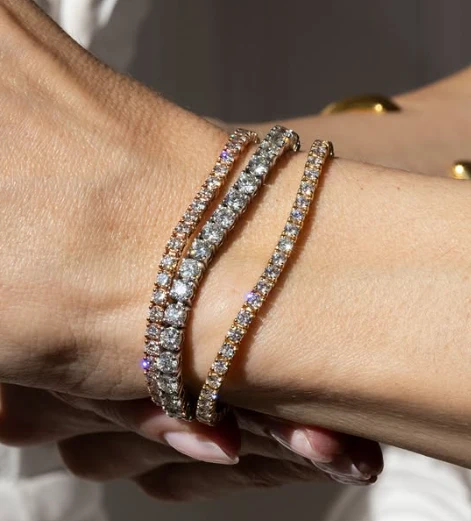
Choosing a tennis bracelet ODM supplier requires more than checking product photos. Reliable partners combine design expertise, manufacturing control, material knowledge, and consistent quality. They should convert a concept into a production-ready bracelet without losing the original design intent. Their development team should also communicate clearly about dimensions, stone layouts, metal choices, and finishing methods. A capable supplier can identify structural risks before sampling begins. They should also provide realistic production timelines and clear minimum order requirements. Quality systems matter because tennis bracelets contain many connected components. Small inconsistencies can affect flexibility, symmetry, and stone security. Buyers should therefore assess the supplier through samples, technical communication, factory capabilities, and documented quality procedures. These factors provide stronger evidence than promotional claims or attractive product photography.
How Should You Evaluate Tennis Bracelet Design Capabilities?
Design capability determines whether a supplier can create commercially viable products. A professional ODM team should work with stone dimensions, link proportions, clasp structures, and wearing comfort. Each element affects the final appearance and production cost. For example, smaller stones require tighter positioning and more precise setting work. Larger stones may require stronger links and deeper seats. Designers should also consider how the bracelet bends around the wrist. Excessively rigid links can reduce comfort during daily wear. A practical development team balances visual symmetry with mechanical flexibility. CAD drawings should show critical dimensions before prototype production begins. Three-dimensional modeling can also reveal interference between links and clasps. Strong design teams do not simply copy reference samples. They refine proportions, simplify manufacturing steps, and preserve the intended aesthetic.
Can A Tennis Bracelet ODM Supplier Develop Custom Bracelet Structures?
Custom structure development separates genuine ODM work from basic customization. Buyers may request different link widths, stone sizes, clasp styles, or bracelet lengths. These changes can affect every connected component. A skilled supplier should evaluate the complete structure before confirming production. The team should check hinge movement, clasp engagement, stone clearance, and link thickness. Adjustable designs require special attention because repeated movement creates additional mechanical stress. The supplier should also recommend suitable tolerances for moving components. One practical case involved a custom bracelet with oversized stones and narrow connecting links. The first prototype looked attractive but bent unevenly around the wrist. Engineers widened the connecting links and adjusted the stone seats. The revised sample improved flexibility without changing the overall appearance. This example shows why structural engineering matters during ODM development.
What Materials Should A Professional Tennis Bracelet ODM Supplier Offer?
Material selection affects durability, appearance, compliance, and pricing. A tennis bracelet ODM supplier should offer suitable base materials for different market positions. Common bracelet bases include stainless steel, brass, and sterling silver. Stainless steel offers strong corrosion resistance and good structural stability. Brass provides design flexibility and can support various decorative finishes. Sterling silver offers a premium jewelry feel but requires careful surface protection. Plating selection also influences the finished appearance. Gold, rose gold, and rhodium finishes require controlled preparation and consistent electroplating conditions. Surface cleaning must remove oils and contaminants before plating begins. Otherwise, adhesion problems may appear during wear or quality inspection. One development sample used stainless steel with pink zircon stones for a fashion-focused collection. The finished concept was called 18K Gold Plated Stainless Steel Heart Tennis Bracelet with Pink Zircon. Its material combination balanced decorative appeal with practical structural strength.
How Does Stone Setting Affect Tennis Bracelet Quality?
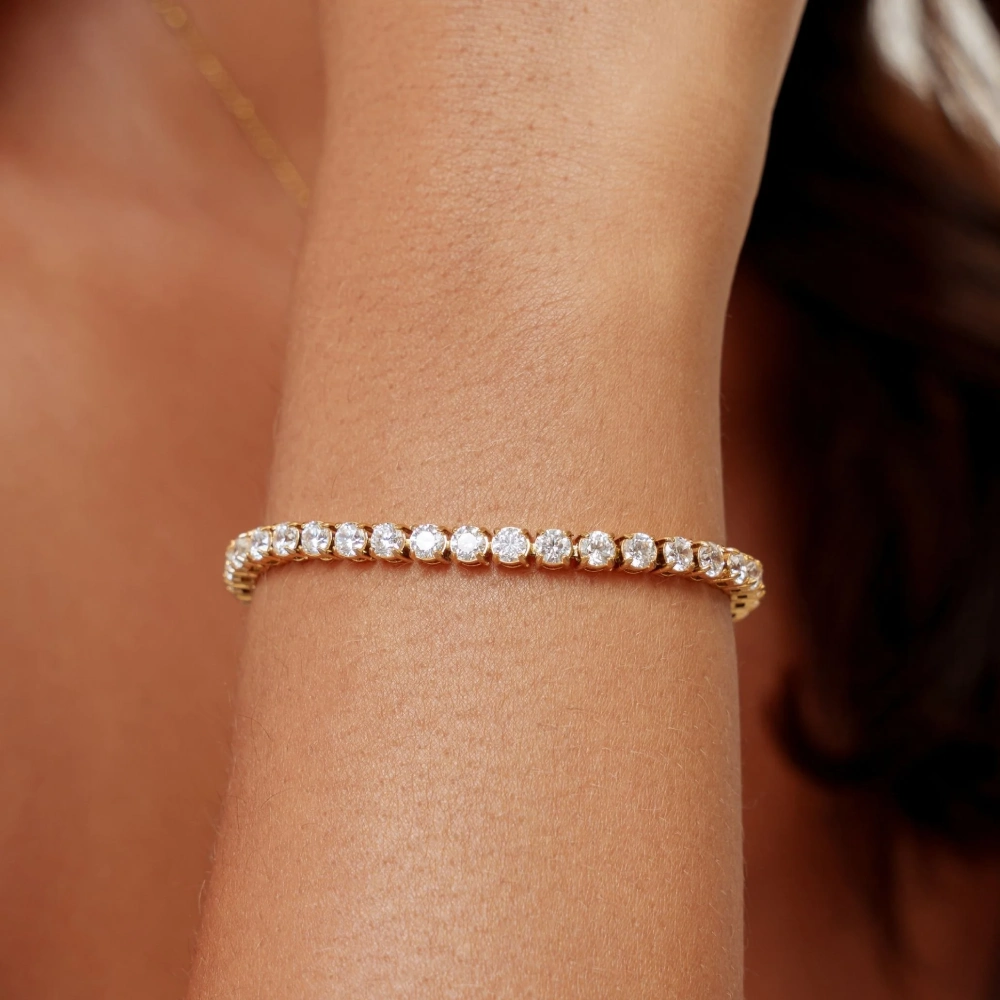
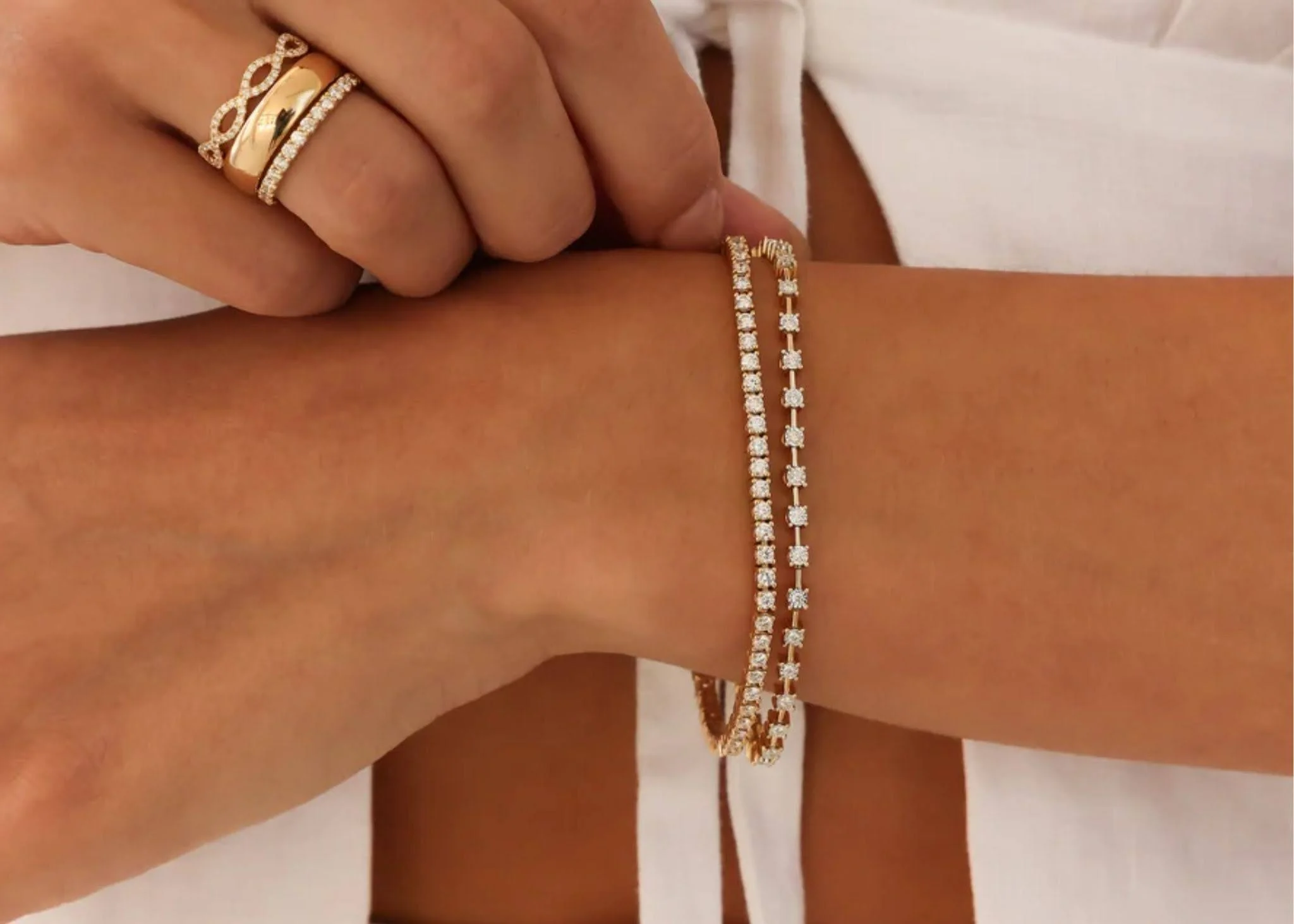
Stone setting directly influences security, symmetry, and visual consistency. Prong settings can create a classic appearance while allowing more light around each stone. Bezel settings provide stronger edge protection but may reduce visible stone surface. Channel settings create a continuous appearance and require precise stone sizing. Tennis bracelets usually contain many repeated stone positions, so minor errors become highly visible. Setting depth must provide sufficient support without covering excessive stone surface. Prong tips should also remain secure without appearing bulky. Production teams should inspect stone alignment from several angles. They should check for loose stones, uneven spacing, damaged edges, and inconsistent setting pressure. A useful quality process combines visual inspection with gentle mechanical checks. These controls reduce the risk of stone movement during packaging, transportation, and normal customer use.
| Setting Factor | Primary Risk | Recommended Check |
|---|---|---|
| Stone alignment | Uneven visual rhythm | Inspect the full bracelet under magnification |
| Prong height | Loose or exposed stones | Check engagement and uniformity |
| Stone spacing | Visible gaps between settings | Compare against approved CAD dimensions |
| Setting depth | Stone instability or excessive coverage | Verify against the approved prototype |
What Quality Controls Should A Tennis Bracelet ODM Supplier Use?
Quality control should cover every production stage rather than only final inspection. Incoming materials should match approved specifications for metal grade, dimensions, and surface condition. During assembly, workers should check link movement and component alignment. Stone setting requires additional inspection because small defects can affect both appearance and security. Plating should receive consistent monitoring for color, adhesion, and surface uniformity. Final inspection should verify bracelet length, clasp operation, flexibility, and overall appearance. A practical production system can use approved samples as visual and dimensional references. Inspectors can compare random finished units against those references before shipment. One commercial order exposed the value of this approach when later production showed slight color variation. The factory traced the difference to inconsistent surface preparation. Standardized preparation and process checks restored batch consistency before the remaining units shipped.
How Can You Verify Plating And Metal Compliance?
Plating quality requires both technical control and suitable documentation. Buyers should request information about the base metal, plating process, coating specifications, and applicable test reports. A tennis bracelet ODM supplier should provide traceable details about materials and finishing processes. Nickel release deserves attention for products intended for prolonged skin contact. Heavy metal restrictions may also apply depending on the destination market. REACH requirements can be relevant for products sold into European markets. Buyers should confirm which substances and test methods apply to their specific product. Plating thickness should also match the agreed specification rather than relying only on visual appearance. Surface adhesion matters because poor bonding can cause premature discoloration or peeling. A reliable supplier should maintain traceable material and production records. Compliance documentation should correspond with the actual materials used in production. This approach reduces uncertainty when products move from prototype approval into commercial distribution.
What Customization Services Should An ODM Supplier Provide?
A complete ODM process should support development from concept through approved production. Buyers may begin with sketches, reference images, dimensions, or target price points. The design team can convert those inputs into CAD drawings and three-dimensional renders. Technical review should happen before physical samples are produced. Sample revisions may address stone placement, clasp dimensions, bracelet flexibility, or surface finishing. Clear revision records help prevent outdated specifications from entering production. Buyers should also receive confirmation of approved materials and final dimensions. A second practical case involved a collection requiring a brighter zircon appearance and a slimmer profile. The development team adjusted stone proportions and modified the link geometry. The revised prototype delivered a cleaner appearance while maintaining adequate flexibility. This process demonstrates how coordinated design and engineering can reduce unnecessary sample cycles.
| ODM Stage | Main Deliverable | Buyer Verification |
|---|---|---|
| Concept review | Design direction and specifications | Confirm appearance and target cost |
| CAD development | Dimensions and structural drawings | Approve critical measurements |
| Prototype | Physical development sample | Check fit, finish, and flexibility |
| Revision | Corrected sample | Confirm every requested change |
| Production approval | Final manufacturing specification | Authorize bulk production |
How Important Is Sampling Before Bulk Production?
Sampling provides the strongest opportunity to identify practical problems before large-scale production. Buyers should inspect dimensions, stone alignment, clasp function, bracelet flexibility, and surface finishing. Wearing tests can reveal issues that photographs cannot show. The clasp should open smoothly while resisting accidental release. Links should bend naturally without creating sharp pressure points. Stone settings should remain secure during reasonable handling. Buyers should also compare the physical sample with approved digital specifications. Changes made after approval should receive written confirmation. A supplier that treats sampling as a formal engineering stage can reduce costly production corrections. One test order demonstrated this benefit when the first sample showed excessive stiffness. The production team modified the link geometry before approving the final structure. The change required little additional material but prevented a larger batch problem.
What Production Capacity Should You Check Before Ordering?
Production capacity involves more than a supplier’s stated monthly output. Buyers should evaluate equipment, skilled labor, quality personnel, material sourcing, and production scheduling. Jewelry assembly often requires several specialized operations. These may include cutting, forming, polishing, setting, plating, inspection, and packaging. Capacity can therefore vary between different product types. A factory may handle simple designs efficiently but require more time for complex stone layouts. Buyers should ask how many production lines can support similar products. They should also confirm typical sample lead times and bulk production schedules. Minimum order quantities should match the supplier’s actual manufacturing model. A smaller trial order can provide useful evidence about communication and quality consistency. Once performance meets expectations, larger orders can follow. Capacity should always be evaluated against the required specification, deadline, and expected order frequency.

What Should You Ask Before Choosing An ODM Partner?
A structured supplier review helps buyers compare capabilities consistently. Instead of focusing only on price, procurement teams should assess technical, commercial, and quality factors together. Important questions include:
-
Can the supplier create original CAD designs from buyer specifications?
-
Which base metals and plating options are available?
-
How does the factory control stone-setting consistency?
-
What inspection procedures apply before shipment?
-
Which compliance documents can support the target market?
-
What are the sample and bulk production lead times?
-
How does the supplier handle design revisions?
-
Can the factory maintain consistent quality across repeat orders?
These questions help separate development-focused manufacturers from simple trading operations. Buyers should request clear answers before approving prototypes. Documentation also provides useful evidence when different suppliers make similar claims. The strongest evaluation process connects technical capability with measurable production controls. Price remains important, but it should not become the only selection criterion.
How Should A Tennis Bracelet ODM Supplier Manage Bulk Orders?
Bulk-order management requires disciplined coordination between materials, production, inspection, and shipment. A tennis bracelet ODM supplier should maintain controlled specifications across every production department. Approved specifications should remain accessible to every relevant production department. Material purchasing should follow the exact grades and finishes confirmed during sampling. Production teams should also use approved samples as physical references. Quality inspectors can establish checkpoints during assembly rather than waiting until final packing. Random sampling can then verify finished products against agreed requirements. Communication becomes especially important when buyers request schedule changes or design updates. A controlled revision system prevents older specifications from entering production. One repeat-order case involved a bracelet design with a fixed stone size and plating color. The buyer later requested a minor clasp change. The factory separated the revised component from existing production materials. This prevented mixed specifications and kept the original order consistent. Such controls become increasingly valuable as order volume grows.
How Can A Tennis Bracelet ODM Supplier Support Long-Term Growth?
Long-term ODM cooperation can create advantages beyond individual product development. Suppliers with strong engineering teams can help buyers expand a successful design into a coordinated collection. Variations may involve stone colors, metal finishes, bracelet widths, or clasp styles. A successful base structure can reduce development time for future models. Cost optimization can also occur through standardized components and improved production planning. Buyers should still maintain clear approval procedures for every new variation. Market feedback can then inform future design decisions without weakening technical consistency. For example, a buyer may initially launch a slim bracelet with clear zircon stones. Customer response may later support a wider version with colored stones. The supplier can modify the existing structure rather than starting from zero. This approach can shorten development cycles and create stronger product continuity. Long-term value comes from combining creativity with repeatable manufacturing processes.
FAQ
What Is The Difference Between OEM And ODM For Tennis Bracelets?
OEM production usually follows specifications supplied by the buyer. The buyer may provide drawings, samples, dimensions, materials, and finishing requirements. The manufacturer then produces the requested design according to those specifications. ODM cooperation involves greater supplier participation during product development. The supplier can provide design proposals, CAD development, structural recommendations, sampling, and manufacturing optimization. ODM therefore suits buyers who have a concept but need technical development support. The exact division of responsibilities can vary between suppliers. Buyers should confirm design ownership, revision procedures, tooling costs, and production requirements before starting development. Clear agreements reduce disputes later. For new collections, ODM can also shorten development cycles when the supplier already has relevant technical capabilities.
How Long Does Custom Tennis Bracelet Development Take?
Development time depends on design complexity, material availability, stone specifications, and revision requirements. A simple design may progress through sampling relatively quickly. More complex structures require additional CAD work and prototype adjustments. Stone size also affects development because repeated settings require precise dimensional control. Plating samples may require additional approval when color matching is important. Buyers should separate design time from physical sample production time. Bulk production should receive a separate schedule after final approval. A practical process usually includes concept confirmation, CAD development, prototype production, revision, and final approval.