OEM Jewelry Manufacturing Process: From Design to Mass Production | Complete Guide for Jewelry Brands
Every successful jewelry brand starts with more than just a beautiful idea—it starts with a reliable manufacturing process.
Whether you’re launching your first collection or scaling an established business, understanding how OEM jewelry manufacturing works can help you reduce costs, shorten development time, avoid production mistakes, and build a stronger partnership with your supplier.
Many buyers imagine that manufacturing begins when they place an order. In reality, successful jewelry production starts much earlier—with design validation, engineering, material selection, and prototype development.
In this guide, we’ll walk through every stage of the OEM jewelry manufacturing process, from your first concept to finished products ready for global shipment.
What Is OEM Jewelry Manufacturing?
OEM (Original Equipment Manufacturing) means a jewelry factory produces products based entirely on your brand’s specifications.
Unlike ODM (Original Design Manufacturing), where you modify existing factory designs, OEM allows complete customization.
This includes:
- Original product design
- Exclusive CAD drawings
- Custom dimensions
- Personalized logos
- Unique packaging
- Brand-specific finishes
- Exclusive materials
- Private label production
For jewelry brands looking to build a distinctive identity, OEM manufacturing provides complete control over product development while leveraging the expertise and production capabilities of an experienced manufacturer.
Why More Jewelry Brands Choose OEM Manufacturing
OEM manufacturing has become increasingly popular among:
- Independent jewelry brands
- DTC (Direct-to-Consumer) brands
- Boutique retailers
- Fashion brands
- Influencers launching jewelry collections
- Subscription jewelry businesses
- Amazon private label sellers
- Shopify store owners
Compared with purchasing ready-made products, OEM manufacturing offers several advantages:
Brand Exclusivity
Your designs remain unique, helping your business stand out in a competitive market.
Better Profit Margins
Exclusive products reduce direct price competition and allow higher retail pricing.
Higher Product Quality
You can define:
- Material standards
- Plating thickness
- Stone quality
- Packaging requirements
- Quality inspection criteria
Long-Term Business Growth
Custom-designed collections strengthen brand recognition and customer loyalty.
The Complete OEM Jewelry Manufacturing Process
Although each factory has its own workflow, professional custom jewelry manufacturers typically follow a similar production sequence.
The process consists of ten major stages.
Step 1. Product Concept & Design Brief
Everything begins with an idea.
Some buyers provide:
- Hand sketches
- Inspiration photos
- Pinterest boards
- Existing product references
- CAD drawings
- Technical specifications
Others only have a rough concept.
An experienced OEM jewelry manufacturer can help transform these ideas into manufacturable products.
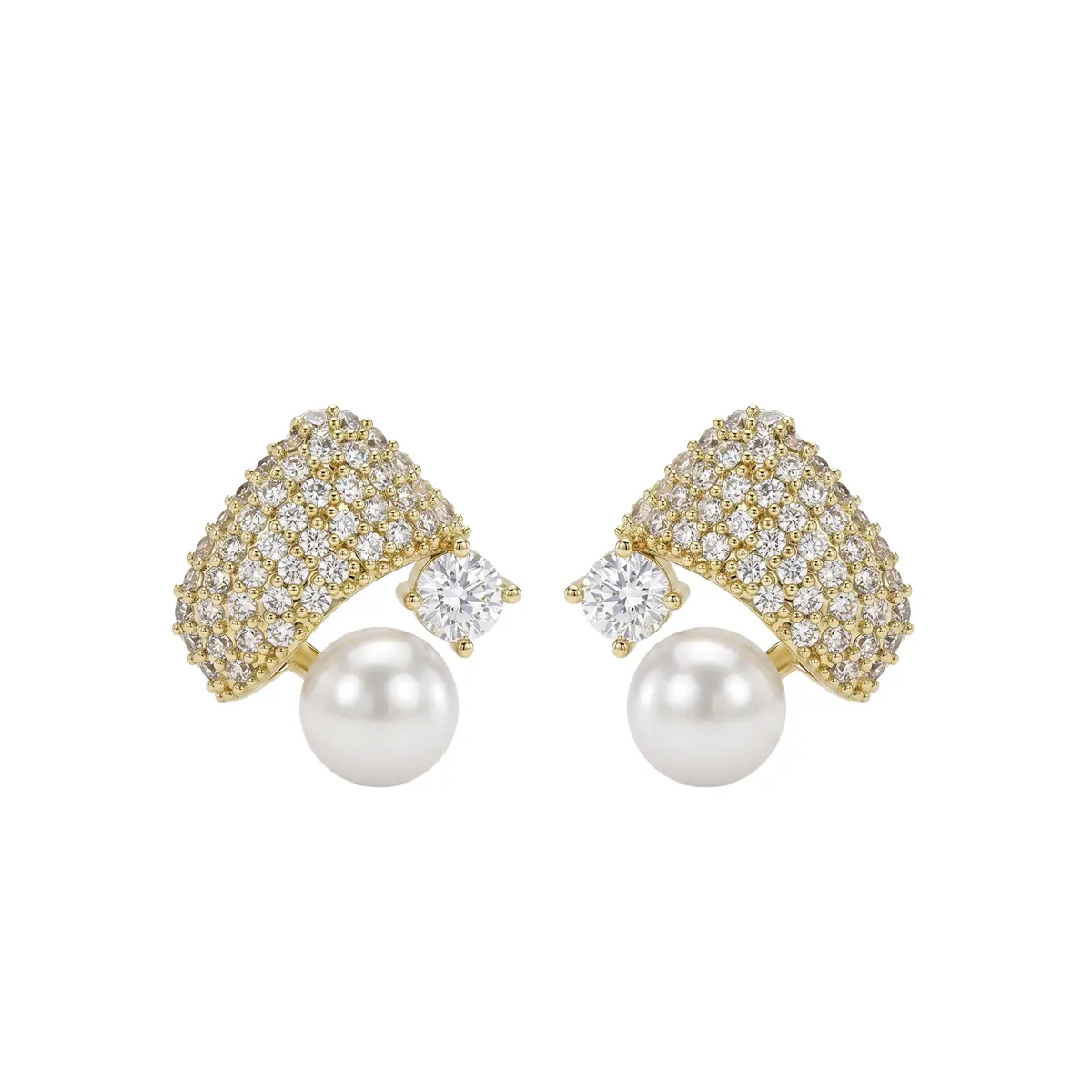
A professional design brief usually includes:
Product Information
- Necklace
- Ring
- Bracelet
- Earrings
- Pendant
- Anklet
Material Requirements
- Brass
- Stainless Steel
- Sterling Silver
- Zinc Alloy
Finish
- 18K Gold Plated
- 14K Gold Plated
- Rhodium
- Silver
- Rose Gold
- Matte Finish
- High Polish
Stone Information
- Cubic Zirconia
- Natural Stones
- Pearls
- Crystals
The more detailed your design brief, the fewer revisions are required later in production.
Step 2. CAD Design & Engineering
Once the product concept is confirmed, the engineering team creates a CAD (Computer-Aided Design) model.
This is one of the most important stages in custom jewelry manufacturing.
The CAD file defines:
- Product dimensions
- Thickness
- Stone positions
- Logo placement
- Assembly structure
- Weight estimation
- Manufacturing feasibility
A skilled CAD engineer doesn’t simply replicate your sketch—they optimize it for mass production while preserving the original design intent.
For example, they may adjust:
- Prong thickness for stronger stone retention
- Clasp dimensions for durability
- Chain connections to reduce breakage
- Wall thickness to improve plating performance
These refinements improve both product quality and manufacturing efficiency.
Step 3. Material Selection
Different materials affect appearance, durability, cost, and production methods.
For fashion jewelry, the most common options include:
Brass
Brass is widely used because it offers:
- Excellent casting performance
- Smooth surface finishing
- Strong plating adhesion
- High-end appearance
- Cost-effective production
This makes brass a preferred material for premium gold-plated jewelry.
Stainless Steel
Stainless steel provides:
- Exceptional durability
- Corrosion resistance
- Scratch resistance
- Hypoallergenic properties
However, it is generally more difficult to customize due to its hardness.
Sterling Silver
Silver offers premium value but requires additional care to prevent oxidation.
Manufacturers typically recommend silver for higher-end collections rather than large-scale fashion jewelry.
Step 4. 3D Printing & Mold Making
After the CAD drawing is approved, the next step is turning the digital design into a physical prototype.
Depending on the product type and manufacturing method, the factory may use 3D printing, wax carving, or CNC machining to create a master model.
This master model is then used to produce a production mold.
The mold determines the final shape, dimensions, and surface details of every piece of jewelry.
Because of this, mold accuracy directly affects production quality.
What Happens During Mold Making?
A professional jewelry manufacturer will carefully evaluate:
- Product thickness
- Sharp edges
- Hollow structures
- Stone positions
- Logo engraving
- Assembly points
- Casting shrinkage
If any structural problems are found, engineers usually recommend modifications before production begins.
Making adjustments during this stage is much less expensive than correcting problems after mass production.
Why Mold Quality Matters
A high-quality mold ensures:
- Consistent dimensions
- Better surface finish
- Lower defect rates
- Faster production
- Longer mold lifespan
Poor molds often lead to:
- Uneven surfaces
- Missing details
- Casting defects
- Higher polishing costs
- More rejected products
This is why experienced OEM jewelry manufacturers invest heavily in mold development.
Step 5. Sample Production & Customer Approval
Before mass production starts, the factory produces a physical sample for customer approval.
This sample represents the final product as closely as possible.
It allows both the customer and the manufacturer to identify any issues before investing in large-scale production.
What Should You Check?
Professional buyers don’t only look at appearance.
They also evaluate:
Overall Design
- Is the size correct?
- Does it match the CAD drawing?
- Are all details accurate?
Surface Finish
Inspect carefully for:
- Scratches
- Bubbles
- Tool marks
- Rough edges
- Color consistency
Weight
Jewelry that is too heavy may be uncomfortable.
Jewelry that is too light may feel inexpensive.
The sample should achieve the right balance.
Functionality
Check every moving component.
Examples include:
- Clasps
- Hinges
- Chains
- Jump rings
- Magnetic closures
Even small issues can become major problems after thousands of pieces are produced.
Common Sample Revisions
It is completely normal to make revisions after reviewing the first sample.
Typical adjustments include:
- Increasing plating thickness
- Enlarging the logo
- Changing chain length
- Improving stone placement
- Modifying product weight
- Strengthening weak connections
Experienced factories welcome feedback because it helps avoid expensive production errors later.
Step 6. Mass Production Begins
Once the sample is approved, production moves into the manufacturing stage.
Although different materials require different techniques, brass jewelry manufacturing usually follows this workflow:
Wax Tree Assembly
Multiple wax models are attached to a central wax stem.
This creates a “wax tree,” allowing many products to be cast simultaneously.
Investment Casting
The wax tree is coated with investment plaster.
After heating, the wax melts away, leaving hollow cavities.
Molten brass is then poured into these cavities.
This process produces highly detailed jewelry components with excellent dimensional accuracy.
Cooling & Separation
After cooling, workers remove each jewelry piece from the casting tree.
At this stage, the products are still rough and require further finishing.
Step 7. Polishing & Surface Finishing
Polishing is one of the most labor-intensive stages of jewelry manufacturing.
Even a perfectly cast product can appear low quality if polishing is not done correctly.
Professional polishing removes:
- Casting marks
- Flash lines
- Sharp edges
- Surface imperfections
The goal is to create a perfectly smooth surface before plating.
Multi-Stage Polishing Process
Most factories use several polishing stages:
Stage 1 – Rough Grinding
Removes casting residue and excess material.
Stage 2 – Fine Grinding
Refines details and smooths edges.
Stage 3 – Mirror Polishing
Creates a bright reflective surface.
Stage 4 – Ultrasonic Cleaning
Removes polishing compounds before plating.
Proper cleaning is critical because any remaining residue can affect plating adhesion.
Step 8. Electroplating – The Most Important Step for Fashion Jewelry
For brass jewelry, electroplating has the greatest impact on appearance, durability, and customer satisfaction.
High-quality plating doesn’t just improve color—it protects the base metal from oxidation and extends the product’s lifespan.
Common Plating Options
Most fashion jewelry manufacturers offer:
- 14K Gold Plating
- 18K Gold Plating
- 24K Gold Plating
- Rhodium Plating
- Silver Plating
- Rose Gold Plating
- Gunmetal Plating
- Black Plating
The choice depends on your target market and price positioning.
The Electroplating Process
A professional plating process usually includes:
- Degreasing
- Acid cleaning
- Surface activation
- Base coating
- Intermediate coating
- Gold or rhodium plating
- Anti-tarnish coating
- Drying and curing
Each step contributes to the final appearance and durability of the jewelry.
Why Plating Thickness Matters
Many buyers focus only on color.
Professional buyers ask about plating thickness.
A thicker plating layer generally offers:
- Better wear resistance
- Longer-lasting shine
- Improved corrosion resistance
- Enhanced customer satisfaction
Factories should be able to explain their plating specifications and recommend suitable options based on your market.
Step 9. Stone Setting & Final Assembly
After plating is complete, products move to stone setting and assembly.
This stage requires skilled technicians, as even minor mistakes can affect the final appearance and durability.
Stone Setting Methods
Depending on the design, manufacturers may use:
- Prong Setting
- Bezel Setting
- Pavé Setting
- Channel Setting
- Glue Setting (for fashion jewelry)
Each method is chosen based on aesthetics, durability, and production efficiency.
Final Assembly
Components assembled during this stage include:
- Chains
- Clasps
- Jump rings
- Charms
- Pendants
- Ear posts
- Butterfly backs
- Extension chains
Every assembled piece should undergo a functional inspection before moving to quality control.
Step 10. Quality Control & Final Inspection
Before packaging, every finished product should pass through a structured quality control process.
A professional jewelry manufacturer typically performs inspections at three stages:
1. Appearance Inspection
Inspectors check:
- Color consistency
- Surface finish
- Plating quality
- Stone alignment
- Logo clarity
2. Functional Inspection
Testing includes:
- Clasp opening and closing
- Chain strength
- Jump ring security
- Stone stability
3. Packaging Inspection
Before shipment, inspectors verify:
- Correct product labels
- Barcode accuracy
- Packaging quality
- Quantity per carton
- Shipping marks
Many export-oriented factories also perform random sampling inspections based on international AQL standards to minimize shipment defects.
Packaging & Shipping
Once inspection is complete, products are prepared for export.
Packaging options typically include:
- Individual poly bags
- Jewelry cards
- Custom logo boxes
- Velvet pouches
- Gift boxes
- Eco-friendly paper packaging
Outer cartons should be designed to protect products during international transportation.
Depending on urgency and budget, buyers can choose:
- Express courier (DHL, FedEx, UPS)
- Air freight
- Sea freight
- Railway freight (for selected markets)
Choosing the right shipping method helps balance delivery speed and logistics costs.
Typical OEM Jewelry Production Timeline
One of the most common questions buyers ask is:
“How long does custom jewelry manufacturing take?”
The answer depends on factors such as design complexity, order quantity, material availability, plating requirements, and production scheduling.
Below is a typical production timeline for custom brass jewelry.
| Production Stage | Estimated Time |
|---|---|
| Design Discussion | 1–3 Business Days |
| CAD Drawing | 2–5 Days |
| Customer Approval | Depends on Buyer |
| Mold Development | 5–7 Days |
| Sample Production | 7–10 Days |
| Sample Revision (if needed) | 3–7 Days |
| Mass Production | 20–35 Days |
| Quality Inspection | 2–3 Days |
| Packaging | 2–3 Days |
| Export Preparation | 1–3 Days |
Typical Total Lead Time:
- Existing designs: 15–25 days
- OEM custom jewelry: 30–45 days
- Complex collections: 45–60 days
If your order includes custom packaging, branded jewelry cards, or multiple plating colors, additional production time may be required.
Factors That Can Affect Production Time
Production schedules may change due to:
- Chinese New Year holiday
- Peak production seasons
- Raw material shortages
- Custom packaging development
- Mold modifications
- Multiple plating colors
- Large order quantities
Planning ahead and confirming your production schedule early can help avoid unnecessary delays.
Common Challenges During OEM Jewelry Manufacturing
Even well-planned projects may encounter challenges.
Working with an experienced manufacturer helps identify potential issues before they become costly problems.
Design Changes During Production
Changing product dimensions, logos, or structures after mold production often increases costs and extends lead times.
It is best to finalize all design details before approving the sample.
Choosing the Wrong Material
A beautiful design may not perform well if the material is unsuitable.
For example:
- Brass offers excellent plating quality and is ideal for fashion jewelry.
- Stainless steel is more durable but more difficult to modify.
- Sterling silver provides premium value but requires additional care to prevent oxidation.
A knowledgeable manufacturer should recommend the most appropriate material based on your target market and budget.
Unrealistic Delivery Expectations
Many buyers expect custom jewelry to be completed within two weeks.
However, OEM production involves multiple specialized processes, each requiring time to ensure quality.
Factories that promise extremely short lead times may be skipping important quality inspections or outsourcing production to third parties.
Poor Communication
Clear communication is one of the most important factors in successful OEM projects.
Before production begins, confirm:
- Product specifications
- Pantone or plating color requirements
- Packaging details
- Quantity breakdown
- Delivery schedule
- Inspection standards
Keeping everything documented helps reduce misunderstandings.
How to Choose the Right OEM Jewelry Manufacturer
Not all suppliers provide the same level of service.
Instead of choosing solely based on price, evaluate potential partners using the following criteria.
Manufacturing Experience
Look for factories with proven experience producing products similar to yours.
Ask:
- How many years have you manufactured fashion jewelry?
- Which countries do you export to?
- What types of customers do you usually serve?
Engineering Support
Strong engineering capabilities are essential for custom jewelry.
A professional supplier should provide:
- CAD development
- Technical recommendations
- Mold optimization
- Material advice
- Production feasibility analysis
Flexible MOQ
A startup-friendly manufacturer should support:
- Low MOQ orders
- Mixed designs
- Trial production
- Collection testing
This allows brands to launch new products with lower financial risk.
Quality Management
Ask about their quality control procedures.
Professional factories should inspect products before, during, and after production.
Request information about:
- Inspection standards
- Plating thickness
- Salt spray testing
- Defect rates
- Quality reports
Communication
Reliable suppliers respond promptly, explain technical details clearly, and provide regular production updates.
Strong communication often reflects strong project management.
Why Many Jewelry Brands Prefer Working with a Factory Instead of a Trading Company
While trading companies can simplify sourcing, working directly with a manufacturer offers several advantages.
Better Cost Control
Factory-direct pricing eliminates intermediary markups.
Faster Communication
You communicate directly with the production team, reducing delays and misunderstandings.
Greater Customization
Manufacturers can recommend design improvements based on production experience.
Better Quality Control
Factory teams oversee every production stage—from mold making to plating and inspection—ensuring greater consistency.
Frequently Asked Questions
What is OEM jewelry manufacturing?
OEM jewelry manufacturing means producing jewelry based on a customer’s original design, specifications, branding, and packaging requirements.
What information should I provide before requesting a quotation?
Ideally, provide:
- Product images or sketches
- Dimensions
- Material preferences
- Plating color
- Estimated quantity
- Logo requirements
- Packaging needs
The more information you provide, the more accurate the quotation will be.
Can I create custom jewelry without a CAD drawing?
Yes.
Many manufacturers can create CAD drawings based on sketches, reference images, or even simple design concepts.
What is the MOQ for OEM jewelry?
MOQ varies depending on design complexity and manufacturing processes.
Many professional manufacturers now offer flexible minimum order quantities for startups and small businesses.
How many sample revisions are normal?
One or two rounds of revisions are common.
The goal is to ensure the product fully meets your expectations before mass production begins.
How can I ensure plating quality?
Discuss plating specifications before production.
Ask about:
- Plating thickness
- Protective coatings
- Anti-tarnish treatments
- Quality testing procedures
How long does OEM jewelry production take?
For most custom projects:
- Sample development: 7–15 days
- Mass production: 20–35 days
The total project timeline is typically 30–45 days, depending on complexity.
Can one factory produce different types of jewelry?
Many experienced manufacturers can produce:
- Necklaces
- Earrings
- Rings
- Bracelets
- Anklets
- Brooches
- Charms
- Pendants
However, always confirm that the factory has experience with your specific product category.
Final Thoughts
Creating custom jewelry is much more than manufacturing—it is a collaborative process that transforms creative ideas into products your customers will wear and trust.
A successful OEM project depends on more than competitive pricing. It requires:
- Clear communication
- Professional engineering
- Reliable sampling
- Consistent quality control
- Transparent production schedules
- An experienced manufacturing partner
Understanding each stage of the OEM jewelry manufacturing process helps reduce sourcing risks, improve product quality, and build a stronger, long-term relationship with your supplier.
Whether you’re launching your first jewelry collection or expanding an established brand, choosing the right manufacturing partner is one of the most important business decisions you’ll make.
Ready to Develop Your Custom Jewelry Collection?
At Joychicco, we specialize in helping jewelry brands, wholesalers, and retailers turn creative ideas into market-ready products.
Our OEM Manufacturing Services Include:
✔ Custom jewelry design support
✔ CAD drawing and engineering
✔ Prototype and sample development
✔ Brass, stainless steel, and gold-plated jewelry manufacturing
✔ Low MOQ for startups and growing brands
✔ Strict quality control at every production stage
✔ Custom logo and private label services
✔ Packaging customization
✔ Global export support
Whether you already have complete technical drawings or just an initial concept, our experienced team can guide you through every stage of the OEM jewelry manufacturing process—from design to mass production.
Contact us today to discuss your project and receive a customized quotation.