What Makes A Good Personalized Bangle OEM Supplier?
-
Personalized bangle OEM supplier selection depends on design, materials, quality control, sampling, MOQ, lead times, and branding.
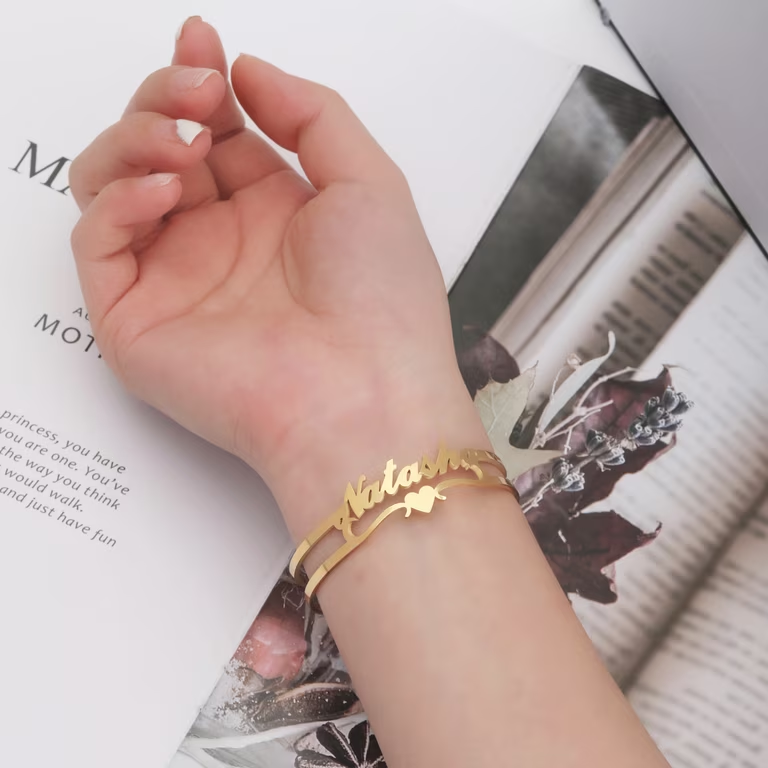
A reliable personalized bangle OEM supplier should combine design flexibility, production control, and consistent quality. Buyers need more than attractive samples or competitive quotations. Custom bangles require accurate specifications from initial design through final inspection. Material selection affects durability, weight, appearance, and finishing performance. Production teams should handle engraving, polishing, plating, forming, and assembly with stable processes. Sampling must confirm dimensions and details before bulk manufacturing begins. Clear communication helps prevent errors involving colors, sizes, logos, and packaging. Strong suppliers also maintain documented quality procedures for repeated orders. Their production planning should support realistic lead times without sacrificing inspection standards. Buyers should evaluate manufacturing capability alongside service reliability. A supplier with balanced capabilities can reduce costly revisions and improve order consistency across different production batches.
How Does Custom Design Capability Affect Production?
Custom design capability directly influences production accuracy and project efficiency. A professional supplier should review technical drawings before confirming manufacturing feasibility. CAD files can define dimensions, wall thickness, openings, engraving areas, and structural details. Designers should consider how each feature affects forming, machining, casting, or stamping. Extremely thin sections may create deformation risks during production. Tight tolerances can increase machining time and inspection requirements. Logo placement requires sufficient surface area for clear engraving or marking. Curved profiles need careful consideration because surface distortion can affect visual alignment. Experienced teams can recommend practical modifications without changing the intended design. They should document approved revisions before creating the final sample. This process creates a clear technical reference for later production stages. Strong design support therefore reduces avoidable manufacturing problems and unnecessary sampling cycles.
What Materials Should Buyers Evaluate for Custom Bangles?
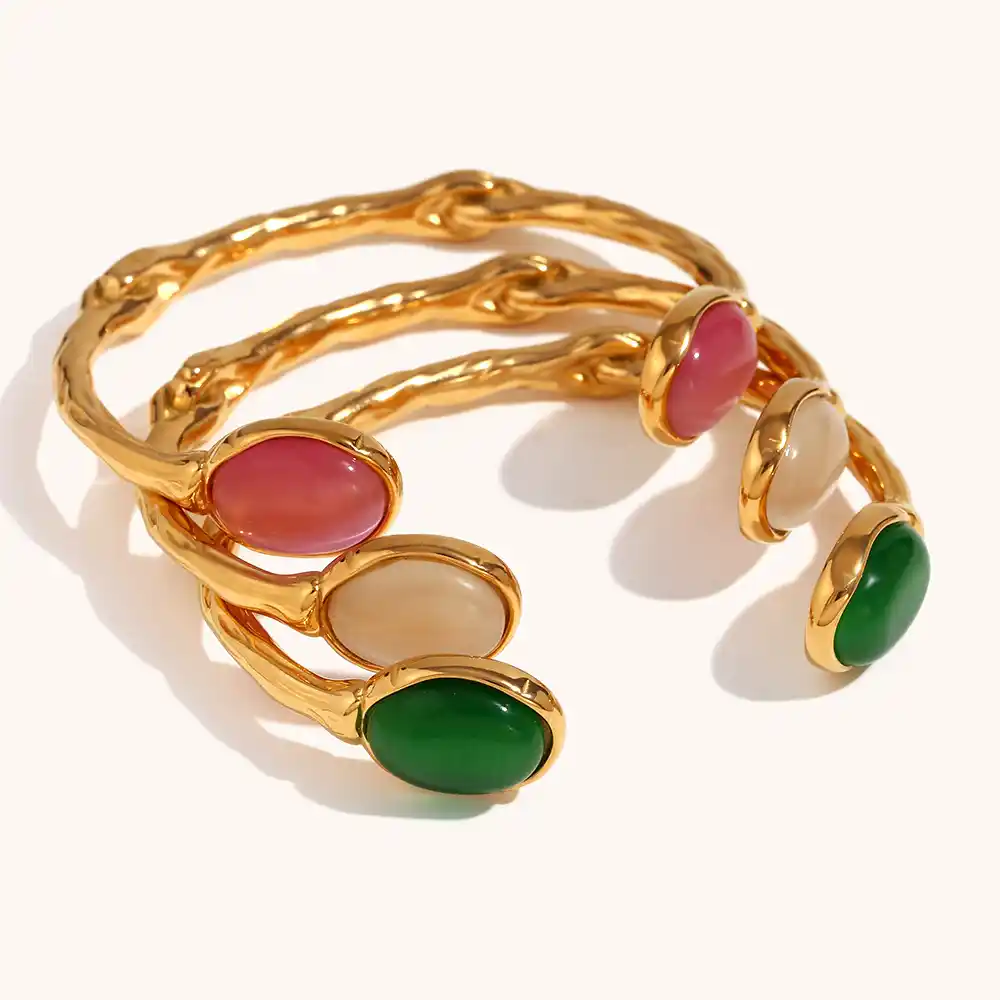
Material selection determines much of a bangle’s mechanical and visual performance. Stainless steel offers strong corrosion resistance, structural stability, and relatively low maintenance. Brass provides easy forming and machining while supporting many decorative finishes. Sterling silver offers a premium appearance and higher material value for selected collections. Buyers should compare hardness, density, surface response, and expected usage conditions. Crystal Zircon Gold Plated Stainless Steel Round Bangle shows how stainless steel, gold plating, and crystal decoration can create a premium visual combination. Plating also requires a suitable base surface and controlled pretreatment. Polishing removes surface imperfections before decorative coatings receive their final appearance. PVD coatings can provide durable decorative surfaces when the process suits the application. Gold plating creates a warmer appearance but requires careful thickness control. Surface preparation remains critical because poor adhesion can cause premature coating failure. Material certificates can support traceability for commercial orders. A suitable material should match both the product concept and expected service conditions.
How Should Sampling and Prototype Services Be Evaluated?
Sampling provides the first physical verification of a custom bangle design. Buyers should inspect dimensions, weight, curvature, closure behavior, and surface quality. Engraved details should remain sharp without excessive depth or uneven edges. Open cuff designs require consistent curvature and comfortable edge treatment. Pearl Heart C Open Cuff Bangle with Four Clover Charm demonstrates why decorative positioning needs careful control. Each charm should remain securely attached and maintain consistent spacing across production units. The sample should also match approved artwork, material specifications, and finishing requirements. Buyers can use a dimensional checklist to record critical measurements. Any deviation should receive written confirmation before mass production starts. Suppliers should explain the cause of each required modification clearly. A properly managed sample becomes the physical benchmark for production approval and later quality inspections.
Which Production Capabilities Support Consistent Custom Orders?
Different customization requirements depend on different manufacturing processes. Buyers should match supplier equipment with the intended product structure and finish. CNC machining can create precise profiles, grooves, holes, and dimensional features. Laser engraving supports detailed logos, names, symbols, and fine surface markings. Stamping suits repeated shapes when production volumes justify dedicated tooling. Casting can create complex forms with integrated decorative structures. Polishing improves reflectivity and prepares surfaces for later coating processes. Assembly capabilities also matter when bangles include charms, stones, hinges, or connecting elements. A supplier should maintain process controls across these operations. Equipment alone does not guarantee consistent results. Skilled operators need clear process parameters and inspection checkpoints. Production records should identify important settings for repeat orders. This combination of machinery, skills, and documentation supports stable manufacturing performance across different custom collections.
How Do Minimum Order Quantities Affect Custom Bangle Projects?
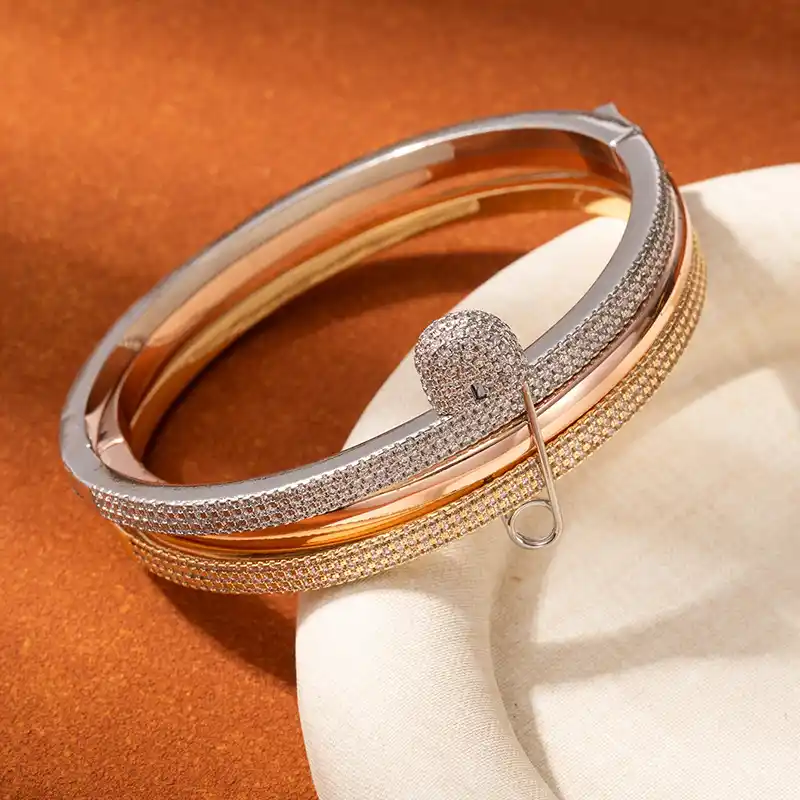
Minimum order quantities influence tooling costs, material purchasing, production scheduling, and unit pricing. Custom projects often require additional preparation compared with standard catalog products. Small quantities can produce higher unit costs because setup expenses spread across fewer pieces. Larger orders usually improve production efficiency after tooling and preparation costs become fixed. Buyers should therefore compare total project economics instead of focusing only on unit price. MOQ flexibility can be valuable for testing a new design before wider distribution. However, extremely low quantities may not support specialized tooling economically. Buyers should ask whether MOQ applies to each design, finish, color, or combined order. Packaging requirements can also create separate quantity thresholds. Clear MOQ terms prevent unexpected charges during production confirmation. A suitable order quantity should balance inventory risk, testing needs, and manufacturing efficiency.
How Should Supplier Capabilities Be Compared?
| Evaluation Factor | What to Check | Why It Matters |
|---|---|---|
| Design Support | CAD review and technical recommendations | Reduces design-related production risks |
| Material Control | Material specifications and traceability | Supports consistent product performance |
| Sampling | Prototype accuracy and revision process | Confirms details before mass production |
| Quality Control | Incoming, process, and final inspection | Reduces batch defects |
| MOQ | Quantity requirements by design and finish | Improves inventory planning |
| Lead Time | Sampling and production schedules | Supports reliable launch planning |
The table highlights the areas that deserve attention before order confirmation. Buyers should compare suppliers using identical technical requirements. A lower quotation may hide weaker inspection or limited customization support. Sampling performance can reveal production discipline more effectively than promotional claims. Material documentation also provides stronger evidence than generic descriptions. Buyers should request clear specifications for plating, dimensions, finishes, and packaging. Production schedules should separate sampling, approval, manufacturing, inspection, and shipment stages. Suppliers should explain how they handle defective units or approved design changes. Communication records can also reveal whether technical questions receive precise answers. A consistent evaluation framework creates a fairer comparison between potential manufacturing partners. It reduces decisions based solely on price and highlights factors that influence long-term order reliability.
How Do Lead Times and Production Planning Affect Delivery?
Lead time includes several stages beyond the actual manufacturing process. Custom designs may require engineering review, sampling, approval, material preparation, and production scheduling. Finishing and inspection can add additional time after the main forming process. Packaging preparation may also require separate artwork approval and material sourcing. Buyers should request a timeline that identifies each major milestone. Production capacity becomes particularly important during seasonal demand peaks. Suppliers with weak scheduling systems may accept orders without sufficient manufacturing space. That situation can create unexpected delays close to shipment dates. Clear approval deadlines help both sides maintain the planned schedule. Buyers should also confirm whether material procurement begins before sample approval. Some suppliers may wait for final approval before purchasing specialized materials. A detailed production schedule provides better visibility and supports more reliable inventory planning.
What Packaging and Branding Options Should Be Available?
Packaging options can strengthen product presentation while protecting bangles during transportation. Buyers may request branded boxes, pouches, inserts, hang tags, or protective sleeves. Packaging materials should match the product’s positioning and expected retail environment. Soft pouches can reduce surface contact between individual metal pieces. Individual compartments can also limit scratches caused by movement during shipment. Printed boxes provide more branding space but require additional artwork and production time. Logo placement should remain consistent across packaging components. Buyers should approve digital artwork before packaging production begins. Packaging dimensions should accommodate the bangle without excessive movement inside the box. Protective materials should also avoid moisture exposure during extended transportation. Suppliers can coordinate packaging production with final product manufacturing. This approach reduces the risk of mismatched quantities or delayed packaging. Well-planned packaging therefore supports both product protection and consistent brand presentation.
What Are the Most Important Supplier Evaluation Criteria?
A practical supplier evaluation should combine technical performance with commercial reliability. Buyers can use the following criteria during initial screening:
- Custom design and engineering capability
- Material specifications and traceability
- Sample accuracy and revision control
- Manufacturing capacity and process range
- Quality inspection procedures
- MOQ flexibility
- Production lead-time management
- Packaging and branding support
- Communication speed and technical accuracy
- Documentation and order traceability
These criteria provide a structured basis for comparing manufacturing partners. Buyers should prioritize factors according to product complexity and expected order volume. A simple design may require less engineering support than a multi-component bangle. Higher customization levels usually require stronger process documentation. Repeated orders also place greater importance on batch-to-batch consistency. Communication becomes especially important when specifications change during development. Suppliers should record approved modifications rather than relying on informal messages. Buyers can also request previous sample references when confidentiality permits. These checks help separate established production capabilities from purely sales-focused claims. The strongest choice usually balances quality, flexibility, capacity, and commercial practicality.
How Can Buyers Verify Long-Term Manufacturing Reliability?
Long-term manufacturing reliability requires evidence beyond one successful sample. Buyers should examine consistency across samples, production records, and repeat orders. Quality documentation can reveal whether inspection follows defined procedures. Production photographs may provide additional evidence of equipment and process organization. Buyers can also request information about material sourcing and finishing processes. Repeat-order performance deserves particular attention because manufacturing consistency can change over time. A supplier should preserve approved specifications for future production runs. Changes in material, equipment, or finishing methods should receive prior approval. Corrective action procedures also reveal how the supplier handles quality problems. Fast communication matters when defects or schedule changes occur. Buyers should assess whether the supplier provides specific solutions instead of vague explanations. Reliable partners treat quality problems as process issues requiring documented corrective action. This approach supports stable results across continuing orders.
How Can Buyers Compare Personalized Bangle OEM Supplier Options?
A structured comparison should evaluate technical capability, quality, cost, and service together. Buyers can begin by requesting identical specifications from several suppliers. Each quotation should identify material, dimensions, finish, packaging, MOQ, and lead time. Comparing incomplete quotations can produce misleading price differences. Sample quality should receive greater weight than promotional photography. Production capability should also match the complexity of the requested design. For example, detailed engraving projects need reliable laser processing. Multi-finish designs require stronger surface preparation and finishing controls. Buyers should review how each supplier handles revisions and quality disputes. Commercial terms also deserve attention because they influence total project risk. A supplier with slightly higher pricing may provide stronger consistency and fewer corrective costs. Personalized bangle OEM supplier selection should therefore focus on total value rather than headline price.
What Questions Should Buyers Ask Before Final Approval?
| Question | Key Detail to Confirm | Potential Risk |
|---|---|---|
| Which material will be used? | Grade, thickness, and material documentation | Incorrect material performance |
| What finish is required? | Polishing, plating, coating, or texture | Visual inconsistency |
| How is the sample approved? | Reference sample and written confirmation | Production disputes |
| What are the tolerances? | Critical dimensions and acceptable variation | Fit or appearance problems |
| How is quality inspected? | Inspection stages and rejection criteria | Undetected defects |
| What is the production timeline? | Sampling, manufacturing, inspection, and shipment | Unexpected delivery delays |
Before final approval, buyers should confirm every specification that could affect production or acceptance. Material grade should be stated clearly rather than described only as metal or stainless steel. Plating specifications should identify the finish and agreed thickness requirements. Dimensions should reference approved drawings or physical samples. Engraving artwork should use the final approved file version. Buyers should also confirm sample approval procedures and production tolerances. Packaging quantities should match the finished product quantity and shipment plan. Inspection requirements should define acceptable cosmetic and functional defects. Lead times should separate sampling from bulk manufacturing and final inspection. Buyers should ask how rejected units will be handled before production begins. Payment terms and replacement policies should also appear in written documentation. Clear confirmation at this stage prevents many avoidable disputes after manufacturing starts.
FAQ
What should I check in a personalized bangle OEM supplier?
Buyers should evaluate design support, material control, sampling accuracy, production capacity, and inspection procedures. Custom projects require more technical coordination than standard products. Check whether the supplier can review drawings and recommend practical manufacturing adjustments. Material specifications should identify the actual metal and finish requirements. Sampling should confirm dimensions, engraving, curvature, and decorative details before bulk production. Quality control should cover incoming materials, production stages, finishing, and final inspection. MOQ and lead times should also match the planned sales volume. Packaging capabilities can matter when branded presentation forms part of the product launch. Finally, assess communication quality throughout the quotation and sample stages. Precise responses usually indicate stronger production coordination and fewer avoidable misunderstandings.
How can I verify the quality of custom bangles before bulk production?
Start with a detailed sample approval process before releasing the full production order. Compare the sample against drawings, dimensions, artwork, material specifications, and finishing requirements. Check surface smoothness, plating consistency, engraving clarity, edge comfort, and structural alignment. Decorative components should remain secure during normal handling. Open cuffs should maintain consistent curvature and comfortable contact points. Ask the supplier to document inspection procedures for the bulk order. Critical dimensions should have defined tolerances when accuracy affects product function. Cosmetic requirements should also specify acceptable limits for scratches, discoloration, or coating defects.Buyers can request inspection photographs or reports before shipment when appropriate.
Keeping an approved reference sample provides a physical benchmark for future comparison. This process helps identify quality issues before large quantities leave production.
What information should I provide when requesting a custom bangle quote?
Provide complete technical information so the supplier can calculate costs accurately. Include drawings, dimensions, material preferences, surface finishes, and decoration requirements. Artwork should use high-resolution files with clear logo or engraving specifications. Mention target quantities for each design, finish, and color where applicable. Packaging requirements should include box types, inserts, labels, or protective materials. Specify whether the project needs samples before bulk production. Desired delivery dates can help suppliers assess production capacity and scheduling. Buyers should also state inspection expectations when cosmetic or dimensional standards are important. Reference images can clarify appearance, but technical drawings should control measurable requirements. If several designs belong to one collection, identify which specifications remain shared. Complete information reduces quotation revisions and helps suppliers provide more realistic production timelines.