
AI jewelry manufacturing What does it mean?
-
AI jewelry manufacturing boosts design speed improves quality and helps pick strong suppliers while enabling production for growth more


AI jewelry manufacturing blends CAD automation, generative design, and CNC or additive hardware. Designers benefit from parametric tools that speed iteration. Machine learning models assist in optimizing support structures for metal sintering. Vision systems inspect fine detail and reduce human inspection time. Robotic arms handle repetitive polishing and plating tasks with high reproducibility. Data pipelines capture production metrics across steps for continual improvement. Integration with ERP and MES systems aligns inventory and scheduling. Onboarding new technology requires clear tech packs and operator training. Purchasers should map internal skill gaps and budget for change management. When implemented well, these systems lower defect rates and shorten time to market for new collections.
AI jewelry manufacturing Cost drivers explained for buyers and CFOs
Material cost remains a dominant driver even with automation in place. Precious metals and gem pricing fluctuate with markets. Machine investment and amortization add fixed costs to per piece pricing. Software licensing and model training bring recurring expenses. Skilled operators and maintenance plans create ongoing labor budgets. Energy consumption for sintering and plating lines influences operational spend. Tooling and fixture design for robotic cells require initial engineering hours. Outsourced services like third party QC or certification create line item fees. Scale matters; unit costs fall as volume rises and systems reach steady state. Buyers who model both fixed and variable expenditures get clearer ROI timelines.
AI jewelry manufacturing Hidden costs quality and compliance traps
Many adopters overlook ancillary costs in retro style jewelry when calculating ROI. Regulatory testing for nickel release or restricted substances exists in key markets and can be costly. Certification fees, customs reclassification, and hallmarking for precious metals add steps. Data security and IP protection for generative designs require legal safeguards. Machine downtime and spare parts replacement should be anticipated. Training and retraining of staff to operate AI enabled lines represent recurring investment. Software model drift can degrade outputs and necessitate revalidation. Warranty and after sale support for automated production runs also add to total cost of ownership. Mapping these items early prevents budget overshoot.
AI jewelry manufacturing Design for automation and manufacturability
Designers must adapt patterns for AI jewelry manufacturing to gain efficiency. Simplify undercuts and reduce unsupported cavities for sintered pieces. Choose feature detail that tolerates typical layer resolution of metal printers. Standardize connection points for modular assemblies to minimize post process labor. Reduce tiny castable parts that demand high manual finishing. Create parametric families so generative tools produce variant sizes rapidly. Include clear tolerances and surface finish targets in tech packs. Collaborate with process engineers early to avoid redesign after prototyping. Early cross functional reviews cut iteration rounds and save both material and machine time.
List of practical steps to capture savings with AI jewelry manufacturing
• Map fixed versus variable costs and model ROI per SKU
• Prioritize SKUs with high manual finishing for automation first
• Use generative design for weight reduction and metal savings
• Standardize components to reduce tooling and fixturing costs
• Build a small pilot cell before full scale rollout
Each step above links directly to a cost lever in the preceding paragraphs. Mapping fixed and variable costs clarifies break even points for new tech adoption. Prioritizing high labor SKUs yields faster returns because automation replaces intensive bench hours. Generative design can reduce material usage while retaining strength. Component standardization lets fixtures and robot programs be reused across lines. Piloting validates assumptions with low capital exposure and produces empirical uptime and quality numbers.
AI jewelry manufacturing Quality assurance and inspection automation
Automated vision systems help ensure consistent women chunky jewelry luxury bangle. High resolution cameras detect surface defects earlier than manual checks. Optical metrology compares manufactured parts to CAD models with micron level tolerance. Inline sensors record process parameters for traceability and root cause analysis. Implement statistical process control to spot drift.
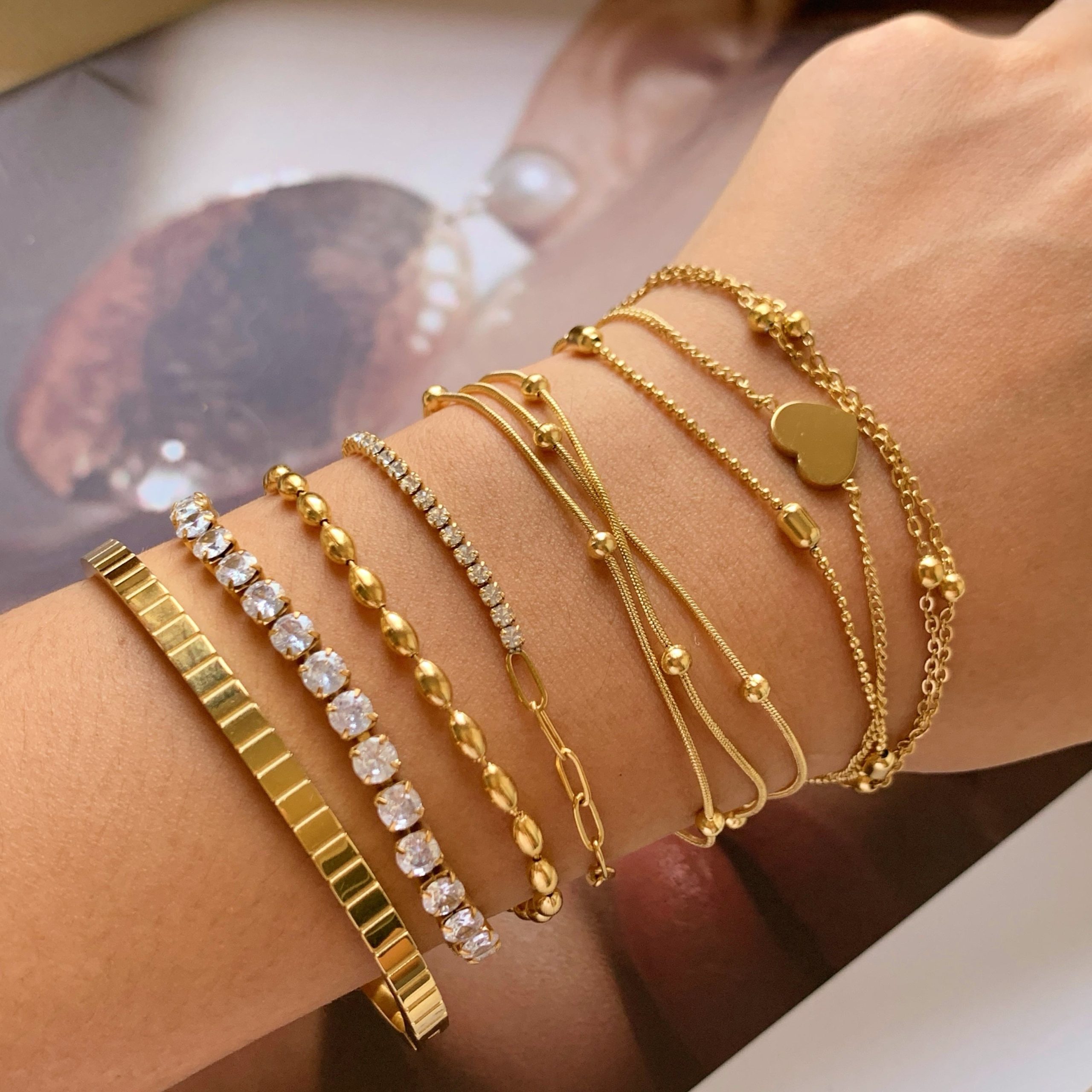
Use sample based destructive testing when needed for mechanical properties. Maintain digital records of inspection results for audits and warranty handling. For high value items, third party certification remains valuable to reassure retail partners. These quality investments reduce returns and protect brand reputation over time.
AI jewelry manufacturing Workforce and reskilling considerations
Introducing automation shifts skill requirements from manual finishing to machine supervision. Train staff on CAM programming and robotic cell maintenance. Encourage cross training between designers and process engineers for faster iteration. Recruit operators with data literacy to manage model updates and interpret dashboards. Offer structured apprenticeships for bench jewelers who transition to automation roles. Plan for gradual role change to preserve institutional knowledge and craft expertise. Human oversight remains critical for final aesthetic approval on complex pieces. Investing in people delivers higher uptime and faster troubleshooting when machines behave unpredictably.
AI jewelry manufacturing Sustainability and material efficiency gains
Generative design often reduces material volume without sacrificing strength. Additive manufacturing enables near net shape production and less scrap from cutting. Powder recycling programs recover unused metal for subsequent runs. Energy efficient sintering cycles and scheduled batch runs lower per piece energy use. Traceability systems track material origin and support ethical sourcing claims. Reduced waste and efficient logistics can support CSR initiatives and premium pricing. Measure improvements through life cycle analysis to quantify environmental benefits. Sustainability becomes a differentiator when documented and independently verified for retail partners.
Typical lead times cost and throughput impacts
| Stage | Typical Lead Time | Throughput Impact |
|---|---|---|
| Design to sample | 3 to 14 days | Faster with generative tools |
| Printing and post process | 2 to 10 days | Batching improves efficiency |
| Finishing and QC | 3 to 12 days | Automation reduces manual hours |
This table clarifies where AI jewelry manufacturing shortens cycles and where human work remains. Design iteration benefits from parametric modeling and rapid prototyping. Printing throughput depends on machine count and powder handling protocols. Finishing remains time consuming but robotic polishing and plating automation reduce manual load. Plan sample schedules to align with marketing launches. Use the table to set expectations with retail and wholesale channels.

AI jewelry manufacturing Integration with supply chain and inventory systems
Tightly integrate AI jewelry manufacturing outputs with ERP and inventory systems to avoid overproduction. Real time data on production yields helps forecasting accuracy. Use MRP triggers to replenish powder, plating supplies, and trims. Link inspection outcomes to SKU readiness flags for shipping. Automate reorder thresholds for critical consumables to prevent downtime. Coordinate with logistics partners for consolidated shipments to reduce freight costs. Maintain batch records to support traceability for recalls and quality queries. These integrations reduce working capital and improve fill rates for omnichannel sales.
Joychicco wholesale and partnership role in AI enabled sourcing
Joychicco offers wholesale jewelry services and can assist brands embracing AI jewelry manufacturing. The firm provides private label capabilities and consolidates small runs.
Joychicco supports sample coordination and handles quality inspection per buyer standards. Brands can test AI manufactured SKUs through Joychicco before scaling production. The company helps with sourcing certified metals and manages plating and packaging options. For retailers aiming to blend automated production with traditional finishing, Joychicco offers flexible fulfillment. Contact Joychicco sales with product codes and desired volumes to receive lead times and sample policies. This partnership reduces supplier discovery friction and speeds market entry.
AI jewelry manufacturing Risk management and IP protection
Protecting generative design outputs and CAM programs is crucial in AI jewelry manufacturing. Use access controls and versioning for CAD and model files. Encrypt data transfers and store backups in secure repositories. Include IP clauses in supplier contracts to prevent unauthorized production. Maintain watermarking or stealth markers in digital files for traceability. Conduct periodic security audits of partner environments. Monitor for unauthorized listings and enforce takedown through legal channels if needed. Plan insurance policies that cover cyber theft and production interruptions. A robust risk framework maintains innovation advantage and prevents revenue loss.
FAQ
How does AI jewelry manufacturing affect production cost per unit and when does it make sense to adopt
AI jewelry manufacturing can lower per unit labor costs for complex pieces. Material and machine amortization add fixed costs that need volume to dilute. Savings arise primarily for designs with heavy manual finishing or multiple revisions. Brands with fast SKU turnover benefit from faster design to market cycles. Small bespoke runs may still favor traditional bench methods for artisanal appeal. Conduct a pilot to measure cycle time, yield, and rework rates. Include software, training, and maintenance in cost models. When projected volumes cover fixed investment, automation yields clear per unit savings. Strategic adoption often begins with high labor content SKUs to accelerate ROI.
What quality standards should brands require when sourcing from AI enabled manufacturers
Brands should insist on documented AQL thresholds for critical defects. Require certificates for metal purity and restricted substances in target markets. Demand process validation reports when new machines come online. Insist on photographic sampling and independent third party audits when appropriate. Define performance tests such as fatigue and wear cycles for wearable items. Ensure inspection data is retained for warranty and traceability. For plated finishes specify adhesion and thickness targets. Measure human perceptual assessments for aesthetic acceptability in addition to numeric checks. Combining objective and subjective evaluation ensures products meet retail expectations and regulatory needs.
How do brands protect their creative IP while using cloud based generative design tools in AI jewelry manufacturing
Protecting creative IP requires a combination of contractual, technical, and operational controls. Execute NDAs and clear IP assignment clauses with all partners and vendors. Host sensitive files in private, access controlled repositories rather than public cloud folders. Use watermarking or embedded markers in CAD files to identify provenance. Limit access to production ready files to named operators and enforce multi factor authentication. Track file usage and log downloads for auditability. Include breach remediation terms in supplier agreements and define penalties for unauthorized production. Retain legal counsel to register designs where applicable in key markets. These measures balance rapid collaboration with necessary IP safeguards.